
Why We Stopped Cruising: The Hidden Environmental Cost of Cruise Ships
There was a time when we loved cruising.
As travellers who wanted to experience as much of the world as possible, cruises seemed like the perfect solution. We could wake up in a different city almost every day, unpack only once, and visit several countries in a single trip. It was convenient, comfortable, and an easy way to explore new destinations.
But the more we learned about the environmental and social impacts of the cruise industry, the more difficult it became to justify stepping aboard.
Today, we choose not to cruise.
This isn't about judging those who do. It's simply a reflection of our own values and our commitment to reducing the impact of our travels wherever possible.
A Floating City Powered by Some of the Dirtiest Fuel on Earth
Modern cruise ships are essentially floating cities. They require enormous amounts of energy to propel themselves through the ocean while simultaneously powering restaurants, theatres, pools, air conditioning, water treatment systems, and accommodations for thousands of passengers.
Many cruise ships have historically burned heavy fuel oil (HFO), also known as bunker fuel. This thick residual fuel is one of the lowest-quality petroleum products available and contains high concentrations of sulfur, heavy metals, and other contaminants.
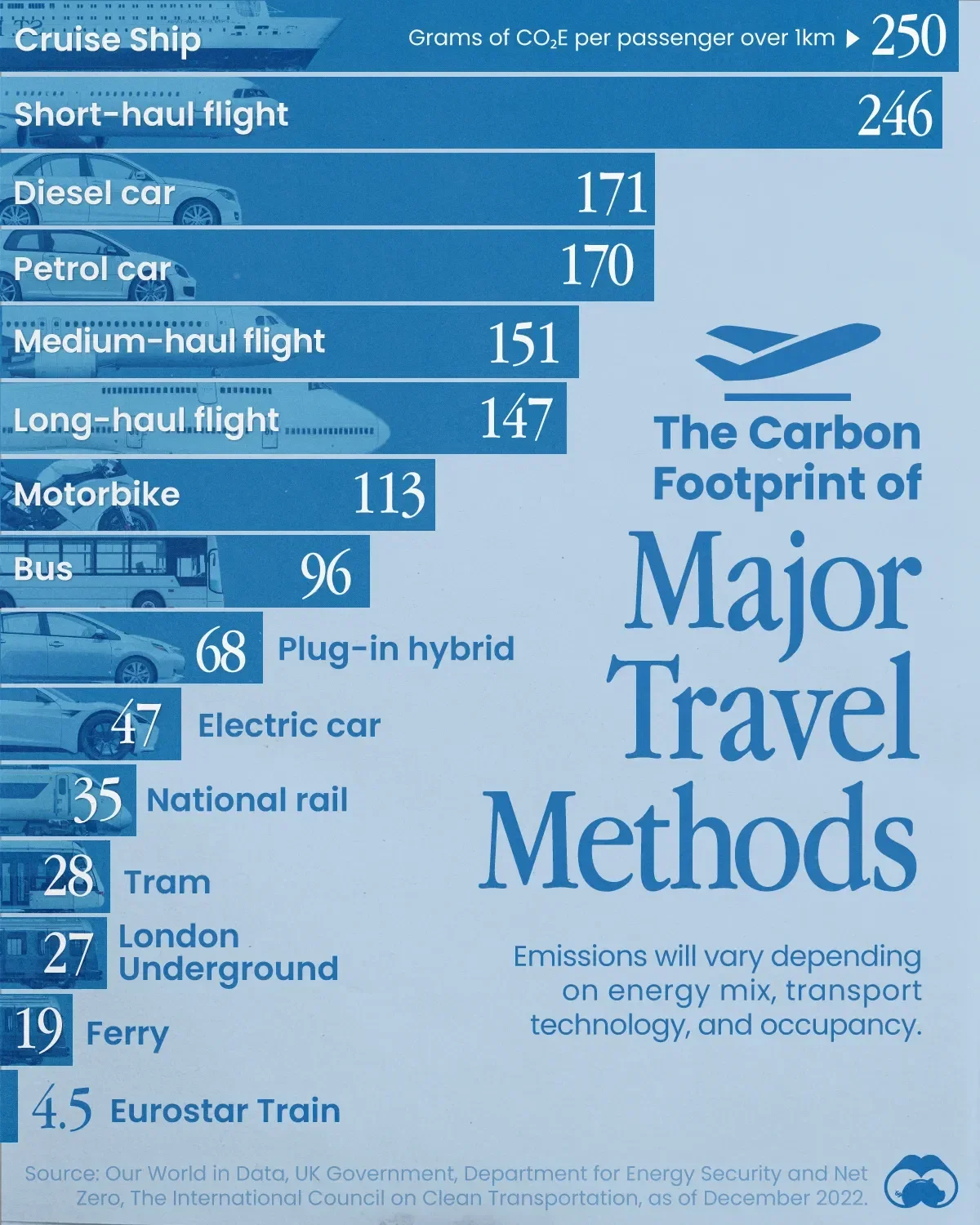
Carbon footprint of major travel methods (grams CO₂e per passenger-kilometre). Graphic by Visual Capitalist. Click to view the original source.
Although international regulations have reduced sulfur limits in many regions since 2020, numerous vessels continue to rely on heavy fuel oil combined with exhaust gas cleaning systems ("scrubbers"), while others have transitioned to marine gas oil or liquefied natural gas (LNG). Even these alternatives continue to emit substantial greenhouse gases, and LNG introduces concerns about methane leakage, a potent contributor to climate change.
For perspective, a single large cruise ship can consume well over 100 tonnes of fuel per day while operating at sea.
Climate Change Doesn't Stop at the Smokestack
Cruise ships emit:
Carbon dioxide (CO₂)
Nitrogen oxides (NOₓ)
Sulfur oxides (SOₓ)
Fine particulate matter (PM₂.₅)
Black carbon
Black carbon is particularly concerning in Arctic regions because it settles on snow and ice, reducing their reflectivity and accelerating melting.
Although the cruise industry represents a relatively small proportion of global tourism, its emissions per passenger can be surprisingly high because enormous amounts of fuel are burned to move hotels, entertainment venues, restaurants, and shopping malls across the ocean.
What Happens to All the Waste?
Thousands of passengers generate enormous quantities of waste every day.
A large cruise ship may produce:
Hundreds of thousands of litres of sewage daily
Large volumes of greywater from showers, sinks, and laundries
Food waste
Plastics
Hazardous chemicals
Bilge water contaminated with oil and machinery residues
International regulations under the International Maritime Organization (IMO) govern waste disposal, and many cruise lines have invested in advanced wastewater treatment systems. However, treated wastewater may still be discharged in many offshore waters, and treatment performance varies between ships and jurisdictions.
Numerous documented enforcement actions over the years have shown that illegal discharges and improper waste handling have occurred within parts of the industry, highlighting the importance of effective oversight.
Disease Can Spread Rapidly at Sea
Cruise ships bring together thousands of people from around the world in a relatively confined environment.
Shared dining facilities, entertainment venues, pools, elevators, and cabins create ideal conditions for infectious diseases to spread.
Norovirus outbreaks have long been associated with cruise travel, causing severe gastrointestinal illness among passengers and crew. The COVID-19 pandemic also demonstrated how rapidly respiratory viruses can spread aboard ships, leading to several highly publicized outbreaks early in the pandemic.
Cruise operators have since strengthened sanitation protocols, ventilation, and health screening, but the underlying reality remains: densely populated, enclosed environments facilitate disease transmission.
The Human Cost Behind the Vacation
Another factor that influenced our decision was learning more about the people who make cruising possible.
Cruise ships employ hundreds or even thousands of crew members, many recruited from developing countries.
Many workers spend months away from their families while working long shifts, often seven days per week. Although conditions and wages vary considerably between companies and positions, concerns have been raised regarding long working hours, limited labour protections, recruitment practices, and the use of "flags of convenience," where ships are registered in countries with less stringent labour regulations.
The hospitality many passengers experience is made possible by people who often work extraordinarily demanding schedules behind the scenes.
Overtourism in Fragile Destinations
Cruise ships can deliver several thousand visitors into small communities within a matter of hours.
This sudden influx can:
Overcrowd historic centres
Increase local pollution
Strain water and waste infrastructure
Raise housing costs through tourism demand
Reduce the quality of life for residents
Create economic dependence on short-term visitors who often spend relatively little ashore
Many destinations around the world are now introducing limits on cruise arrivals to better protect local communities and ecosystems.
Our Choice
Cruising once felt like an efficient way to see the world.
Ironically, slowing down has allowed us to experience it more deeply.
Instead of visiting five cities in a week, we'd rather spend several days exploring one destination, supporting locally owned accommodations and restaurants, using public transportation, and connecting with the community beyond the tourist district.
The environmental footprint is typically lower, local economies benefit more directly, and our travel experiences have become far richer.